
Latin America
Working Group
Chair: Omar Garcia
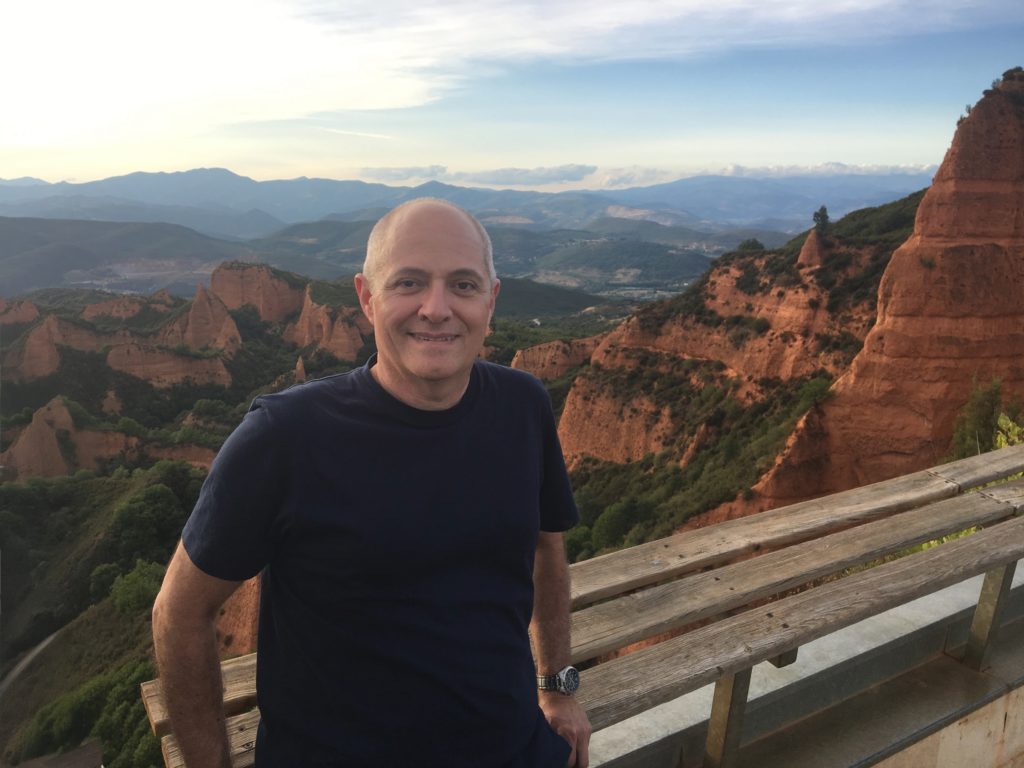
Professor Omar García, BS, BA, MA, MSEd, PhD [Miami], PhD [London], FTCD, holds the 1926 Chair of Spanish at Trinity College Dublin, where he is the Head of the School of Languages, Literatures and Cultural Studies since 2021, and Director of the Centre for Global Intercultural Communications since its foundation in 2021.
Professor García is a Hispanist, who studies both Latin America & Spain, and a Comparatist, a published, award-winning poet and a human rights activist. He joined TCD in January 2020 with the specific remit of developing Latin American Studies, and was at Queen Mary University of London from 1992 to 2020, where he was Professor of Hispanic Studies and Comparative Poetics (2010-20). He brings to the role over 33 years of experience in Higher Education at international level.
Vice Chair: Irene Pedreira
Irene Pedreira Romero is Director for International Projects and Networks at the Vice-Rectorate for Internationalization of the University of Granada (UGR) since June 2019. With over 25 years of experience in higher education, she specializes in EU-funded academic cooperation projects and multilateral networks. In this context, she manages the UGR’s participation in international academic projects focused on institutional cooperation, acting as the main contact for the administration, coordination, and overall management of these initiatives. She has extensive experience collaborating with universities in Latin America, participating in various academic mobility and capacity building projects, as well as training activities in the last two decades. She has given seminars on various aspects of the internationalisation of higher education at different universities in the region and is a member of the LAWG since 2020.
Working Group Focus
The Latin America Working Group (LA WG) aims to promote a space for scholarly exchange and interaction between Latin American universities and universities in the Coimbra Group, fostering impactful and collaborative action in both regions. Research, policy development, knowledge exchange, and knowledge diplomacy must be rooted in an understanding of local and national priorities within Latin America, as well as the strengths and benefits of mutual collaboration, with the view to implementing long-term, sustainable partnerships.
Collaboration for academic advancement, knowledge dialogue, and research development between European universities and Latin American institutions has a long tradition. The Coimbra Group has played an important role in providing links to institutions and networks relevant to this cooperation, facilitating initiatives and projects for the benefit of member institutions. To increase knowledge of regional opportunities and challenges, the LA WG pursues a jointly agreed set of shared goals and synergies among Coimbra Group universities. This strategy aims to increase the quality and quantity of academic cooperation with Latin American institutions, networks and agencies, leveraging numerous opportunities created by ongoing high-level policy dialogues between the two regions. Consequently, it is essential to understand the Latin American context from a global perspective and define the role of Latin American experiences in tackling global challenges.
A key priority for the LA WG is to reinforce and develop cooperation with networks in Latin America, such as AUGM, CLACSO, and UDUAL, whilst simultaneously seeking synergies with other networks with which the LA WG has not previously collaborated, such as the Asociación Universitaria Iberoamericana de Postgrado (AUIP). These initiatives include research round tables leading to joint research proposals, jointly created enhancement programmes, shared expertise around themes of mutual interest, mobility and exchange opportunities, and joint activities designed to generate interaction at the postgraduate level.
Contributing to these aims, the LA WG focuses on engagement with a range of institutions and organisations across Europe and Latin America, including the EU-LAC Foundation, the European Commission’s DG RTD, CLACSO, and the UNESCO. This engagement supports discussions on policy and practice, contributing to plans and actions that are fully inclusive of Latin American higher education cultures, expertise, research, teaching, and professional services.
Priorities for 2026 – 2029
- Fostering strategic partnerships in a global context in relation to Latin America: to build links with key stakeholders, such as the Instituto Cervantes (IC) or the Asociación Universitaria Iberoamericana de Postgrado (AUIP) and to engage with key representatives across Europe and Latin America, advocating where necessary, to contribute to policy development that promotes sustainability, socio-economic inclusion, and reflection on Latin America’s role in in a global context.
- Maximising Coimbra Group synergies and participation: to proactively engage with all 42 member universities of the Coimbra Group, identifying internal synergies and encouraging more active engagement with Latin America among institutions with a shared willingness to cooperate, thus expanding knowledge exchange and enhancing the global reach of our network.
- Developing equitable, long-term projects and funding opportunities: to collaborate on fruitful, long-term projects across Europe and Latin America with potential global reach, promoting not only equality but also equity, whilst fostering cooperation through a diverse range of funding mechanisms.
- Promoting Spanish as an academic and scientific language: to increase the visibility and transnational promotion of Spanish as a key language for academic and scientific discourse, in alignment with the strategy adopted by the University of Granada which is leading the way in its implementation at Latin American universities.
- Enabling dialogue and impactful platforms with regional networks: to foster inclusive, constructive dialogues and exchange platforms with key regional networks, particularly CLACSO and AUGM, exploring shared visions on critical thinking, academic freedom, and democracy, while shaping the collaborative EU-LAC research and education landscape
Recent highlights since September 2025
- Facilitated collaboration in Brussels for a joint open thematic session at the Coimbra Group Annual Conference 2026 (Granada, 16 June 2026): “Interconnecting knowledge: intercultural communication, shared civic values and global mobility”, organised by the EUniverse Erasmus+ project in collaboration with the Global Partnerships and Academic Exchange & Mobility Working Groups.
- Erasmus+ Action Type KA171-HED (Mobility of higher education students and staff supported by external policy funds, KA171-HED) application submitted by Trinity College Dublin in February 2026, aimed at expanding partnerships in Latin America and the Caribbean: UDIR-UNAM, Morelia, Mexico, Universidad Rafael Landívar (Guatemala), FGV (Fundação Getulio Vargas, Brazil), and UWI (The University of the West Indies at Cave Hill, Barbados) – pending results (expected June/July 2026).
Ongoing/forthcoming activities 2026 – 2027
- Joint high-level Latin America WG event in Brussels (end of 2026): to organise a high-level event aimed at highlighting the spirit, and crucial importance, of intellectual independence in securing the traditional role of universities as knowledge-based influencers on public policy.
- The event will gather academics, researchers and policymakers from Europe and Latin America to strengthen partnerships based on the fundamental principles of academic freedom that have long underpinned university traditions in both regions. An anticipated outcome is the production of two thematic policy briefs examining academic freedom as a prerequisite for generating robust and reliable research on global challenges of strategic importance to Latin America, the Caribbean (LAC) and Europe.
- Co-creating an EU-LAC cooperation agenda with CLACSO: to develop, in collaboration with CLACSO, a jointly designed cooperation agenda that enhances the potential of EU-LAC collaboration by building bridges between different initiatives in both regions (e.g. Global Gateway, the next EU Research and Innovation framework programme (FP10), and related initiatives).
- Developing joint funding applications: to prepare funding proposals in the fields of either education and/or research under relevant European Commission programmes (e.g. Erasmus+, Horizon Europe, etc. ), as well as through Latin America-focused funding bodies and organisations (e.g. UNESCO and the EU-LAC Foundation), in order to support long-term collaboration in research and higher education.
Ongoing / Forthcoming activities 2027 – 2029
- Joint academic seminar in Latin America and the Caribbean (LAC) – potentially in collaboration with CLACSO. The event will be organised around the time of the XI CLACSO conference (either immediately before or after the event) on selected common/cross cutting challenges f shared importance to LAC and Europe.
- Strengthening engagement with key EU-LAC networks: continue to engage with the EU-LAC Foundation and the Academic Forum of the Permanent Academic Forum between Latin America and the European Union – FAP ALC-UE (and other relevant networks), through participation in key events and collaboration in the development of concept notes and supporting documentation for international organisations and governments in both regions.
- Expanding cooperation with European actors in the region: foster ties and explore opportunities for formal cooperation agreements with major European actors active in LAC such as Fundación Carolina, DAAD, SEGIB, CALAS and others.
- Exploring the possibility of organising a second Coimbra Group high-level event bringing together significant academic input and a broad range of public and private stakeholders to co-create a joint agenda for collaboration. The first edition took place in Montevideo, Uruguay, on 5-6 December 2022, under the title “Strengthening academic collaboration between Latin America and Europe”.
- Seeking to publish a follow up volume, or series to the 2021 book, this time potential entitled Why Latin America Matters/ Latin American Matters.
- Launching ‘Smaller Tasks for Big Impact’ across the network: empowering each WG member to own a piece of the work plan by creating smaller and achievable projects across the network based on existing institutional partnerships and networks, while enhancing areas that could benefit from each other’s expertise to benefit the entire Coimbra Group network.

Contact person at the CG Office: Catarina Moleiro (moleiro@coimbra-group.eu)