

Doctoral Studies
Working Group
Chair: Adriana Zait
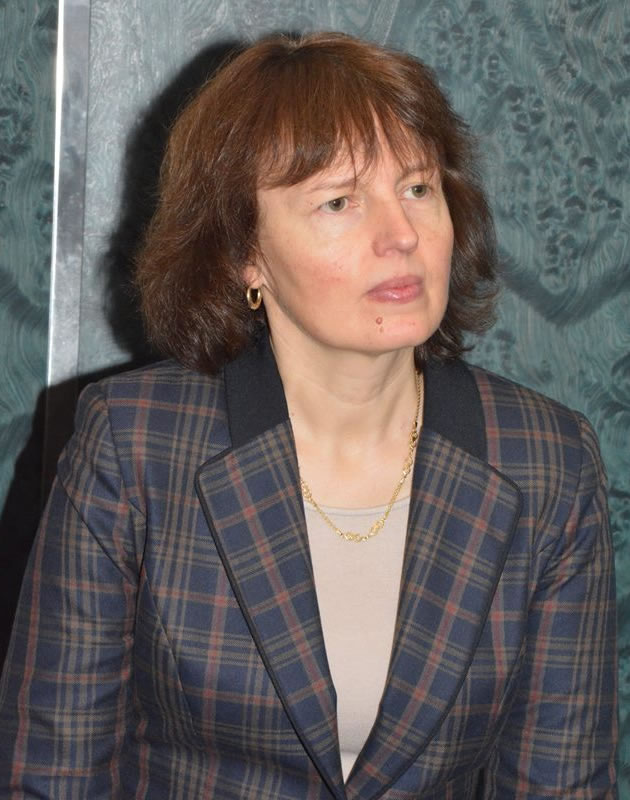
Adriana Zait is professor and director of the Doctoral School of Economics and Business Administration from University Alexandru Ioan Cuza of Iaşi. She holds a PhD in econometrics and teaches business research methods, intercultural management, services marketing and public relations. As PhD theses coordinator in Marketing, she supervised 29 doctoral students from 2007 to the present, and has been member in more than 30 doctoral coordination commissions.
Her main interests are in ensuring an interdisciplinary and intercultural education for doctoral students, in a research environment in quest of a better adaptation to the complexity, volatility and incertitude of our world.
Vice-Chair: Elise Pinta
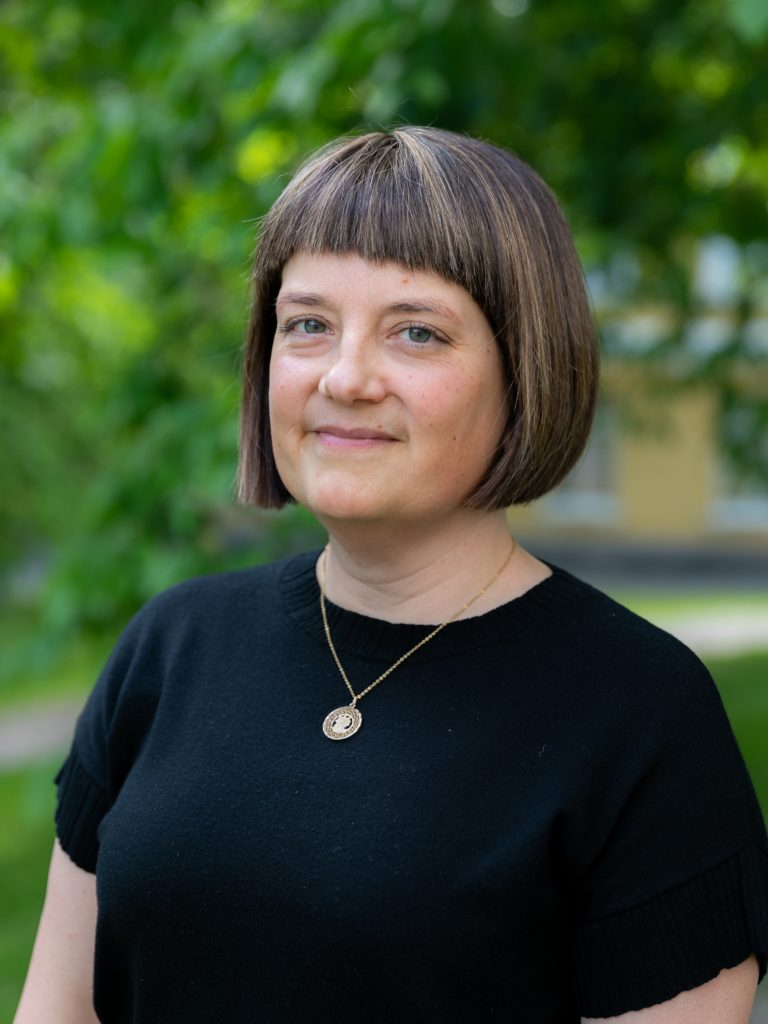
Head of the Research Career Unit, PhD Elise Pinta is long-standing developer of doctoral training at University of Turku. She holds a PhD in medicinal biochemistry and is also trained as a teacher, rector and university administrator. Pinta has been establishing doctoral programs and graduate school activities, such as university-wide transferable skills training, supervisor training and different mentoring programs. Pinta is also an active player in national and international networks (latest, European University EC2U consortium’s Cotutelle & Doctoral Training Cooperation task force and National ERA4 action group coordinated by Unifi (Council of Rectors of Finnish Universities)).
It was Pinta’s initiative to organise the first national doctoral education day in Finland, now an annual tradition. Her development efforts are currently focused on strengthening cross-sectoral cooperation and supporting the well-being of early-career researchers.
Working Group Focus
The Doctoral Studies Working Group supports Coimbra Group (CG) member universities in advancing the scientific quality and societal relevance of doctoral education and research, through a permanent exchange of information, the sharing of best and innovative practices, and joint activities among CG universities.
The WG collaborates with corresponding European University Alliances and other university networks in the organisation of doctoral programmes and the support of early research careers. The DS WG operates at the intersection of research excellence, institutional practice and public policy, with a strong commitment to evidence-based advocacy in the field of doctoral and postdoctoral training. The WG actively participates in various EU fora, representing the entire network within the scope of its responsibilities. Recently, this role has been particularly prominent in connection with European Research Area (ERA) activities.
The DS WG brings together doctoral supervisors, administrative support personnel for doctoral researchers, and institutional leaders to examine current challenges and develop practical responses grounded in rigorous scholarship, aiming to support informed institutional development and public advocacy. The WG places particular emphasis on the quality of doctoral supervision, recognising supervisors not only as academic mentors but also as key supporters of researchers’ skills development and wellbeing.
Interdisciplinarity is also central to the DS WG’s approach and is increasingly required when navigating complex cross-disciplinary knowledge environments. The WG also addresses the far-reaching implications of artificial intelligence (AI) for doctoral research, supervision practices, research integrity and the future of knowledge production.
The DS WG operates in a context of overlapping crises, such as climate change, geopolitical instability, uncertainty and democratic decline. It focuses on how institutional structures, funding and policies shape the work of doctoral researchers, supervisors and support staff, and how these factors influence the quality of doctoral education and its contribution to science and society.
Priorities for 2026 – 2029
- Doctoral supervision quality: synthesising best practice and challenges, developing frameworks, offering training resources and policy recommendations to professionalise and support doctoral supervisors across disciplines and institutional contexts (primary focus).
- Doctoral education in a multi-crisis context: examining how overlapping global crises affect doctoral researchers’ projects, scholarly output, acquired skills, health and wellbeing and career trajectories, as well as how universities can build resilience and respond with agility and flexibility to support early-career researchers, encouraging international mobility and collaboration.
- AI and research integrity in doctoral education: exchanging information and discussing how generative AI reshapes doctoral research practices, supervision, assessment and academic integrity, with a view to suggesting institutional guidance tailored to CG member universities.
- Societal impact and interdisciplinarity: promoting doctoral research that bridges disciplines and contributes to real-world challenges, and identifying suitable institutional models that harmoniously and rigorously integrate both fundamental research and applied inquiry.
- Evidence-based policy advocacy: generating ideas, best practicesand empirical data to inform national and European policies on doctoral education, researcher training and the recognition of doctoral competences in interconnected careers within and beyond academia.
Recent highlights since September 2025
- Special DS WG webinar presenting the results of the PRIDE network on supporting doctoral researchers in their final year, 4 November 2025.
- Supporting researchers’ careers: special event, “Life after the PhD”, with the participation of early-career researchers from CG universities, 24 November 2025.
- Joint meeting between the DS WG and EURODOC on young researchers’ mental health, 25 February 2026.
- “Building a supportive research culture”: special event for the DS WG and other interested WGs, 14 April 2026
- Preparation of the 10th edition of the network’s Three-Minute Thesis (3MT) Competition live final, taking place during the Coimbra Annual Conference hosted by the University of Granada, 18 June 2026.
- Participation in the Coordination Committee developing the European Doctoral Day (first edition held across Europe on 13 May 2026).
Ongoing / Forthcoming activities 2026 – 2027
- Debriefing report following the Coimbra Group Annual Conference in Granada, including updates from members: snapshot of best practice and challenges (November 2026).
- Report on updated results from the doctoral supervision work stream (December 2026).
- Comparative analysis of doctoral supervision, doctoral training and collaborative practices across Coimbra Group universities and European University Alliances: mapping existing provision, identifying gaps and synthesising shared solutions for supervisors’ professional development and the improvement of doctoral education (February – March 2027).
- Special event under the “Life after the PhD” series, within and beyond academia (April-May 2027).
- Preparation of the network’s 3MT Competition live final to take place during the Coimbra Group Annual Conference 2027 at the University of Würzburg (June 2027).
Forthcoming activities 2027 – 2028
- Special event on doctoral research and supervision in the age of GenAI and in an international context, and the consequences for early-career research trajectories (November 2027).
- Compendium of open access training resources for doctoral supervisors: a freely accessible repository of evidence-based materials, case studies, publications and reflective tools across career stages, disciplines and institutional contexts (March-April 2028).
- Preparation of the network’s 3MT Competition live final to take place during the Coimbra Group Annual Conference 2028 (June 2028).
Forthcoming activities 2028 – 2029
- Open special event to be defined according to the priorities identified during the DS WG meetings in 2027 (November 2028).
- Open special event to be defined according to the priorities identified during the DS WG meetings in 2028 (March-April 2029).
- Preparation of the network 3MT Competition live final to take place during the Coimbra Group Annual Conference 2029 (June 2029).
- Updated reports on the stated priorities of the DS WG for 2026-2029 and evaluation of the 2026-2029 Work Plan, in preparation for the next DS WG strategic cycle: systematic review of outputs, impact and member engagement over the plan period, with a view to informing an ambitious and responsive agenda for 2030 and beyond (November – December 2029).

Contact person at the CG Office: Stefania Parnici (parnici@coimbra-group.eu)