
Coimbra Group advocates for a stronger, better-funded Erasmus+ at the European Parliament
28 January 2026
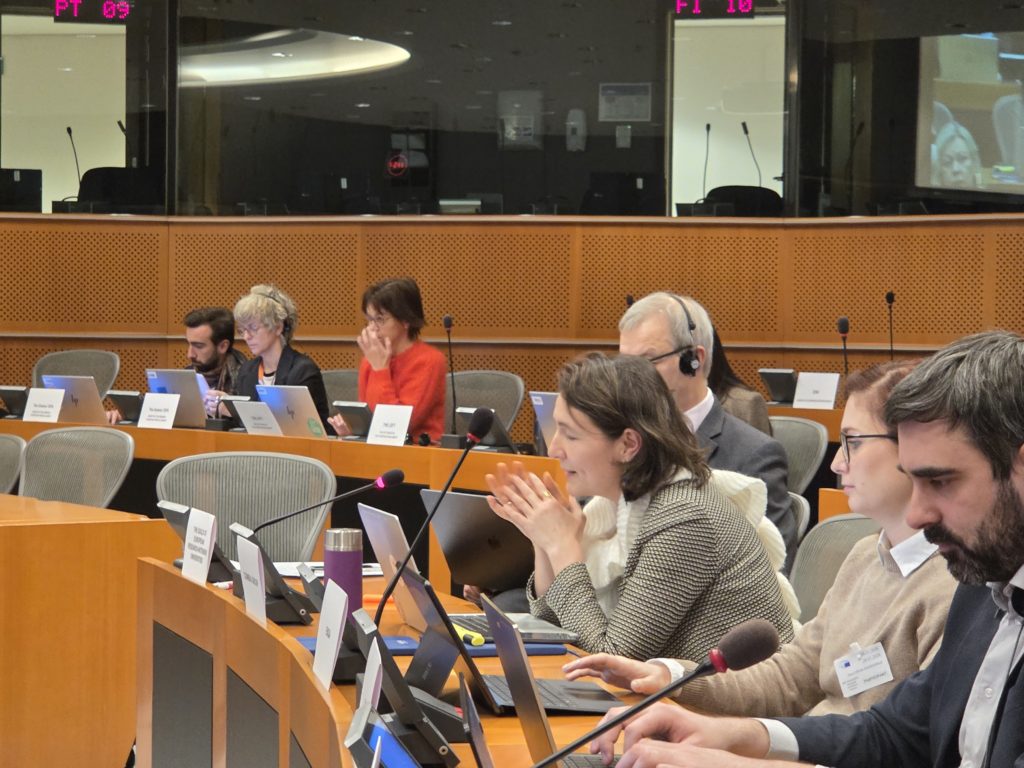
The Coimbra Group participated in a higher education stakeholder dialogue on 28 January 2026 at the European Parliament, invited by MEP Bogdan Zdrojewski, rapporteur for the Erasmus+ 2028-2034 programme. Emmanuelle Gardan, director of the Coimbra Group Office, and Rúben Castro, policy and advocacy officer, represented the network during the discussions. The Coimbra Group reaffirmed that the next Erasmus+ must remain centred on its core educational mission, civic purpose and proven strengths: student and staff mobility, transnational cooperation and the fostering of a shared European identity. The network warned that the currently proposed budget falls significantly short of what is needed, recalling the sector’s call for at least €60 billion and for long-term budget predictability. Adequate funding, the Coimbra Group stressed, is essential to maintain high‑quality education, reinforce and expand inclusion measures, support universities’ long‑term partnerships, and scale successful initiatives such as the European Universities Alliances. The Coimbra Group also underlined that any new programme objectives or initiatives, such as competitiveness, preparedness or strategic scholarships, must be co‑created with stakeholders and designed to reinforce academic freedom, bottom-up approaches, curricular autonomy and interdisciplinary learning. The Coimbra Group further called for stronger synergies between Erasmus+ and Horizon Europe as well as other relevant EU programmes, as universities’ education and research missions are intrinsically linked and cannot be treated separately. On international cooperation, we advocated for the expansion of International Credit Mobility and for securing dedicated funding to strengthen the international dimension of the programme. Concluding its intervention, the Coimbra Group emphasised that the next Erasmus+ programme represents a strategic investment in Europe’s future and reaffirmed its readiness to work closely with EU co-legislators towards a stronger, better funded and more inclusive programme. The stakeholder dialogue brought together 25 actors, including national agencies, country representatives, student organisations and higher education umbrella organisations. Several Members of the European Parliament and representatives of the European Commission’s DG EAC, including the new Director for Youth, Education and Erasmus, Diana Jabłońska, also actively contributed to the meeting.