


Paul Pauli became the President of the Julius-Maximilians-Universität Würzburg (University of Würzburg) in April 2021. From 1979 to 1986, he studied psychology at the University of Tübingen and later held positions as a doctoral researcher at the Max Planck Institute of Psychiatry in Munich and as a post-doctoral researcher at the Department of Medical Psychology and Psychosomatics at the Technical University of Munich.
Paul Pauli completed his doctorate in 1991 and earned his Habilitation in medical psychology at the Institute of Medical Psychology and Behavioural Neurobiology at the University of Tübingen in 1997. From 2000 to 2001, he held the Chair of Clinical Psychology Research at the University of Southampton, England. Since 2001, Paul Pauli has held the Chair of Psychology I, Biological Psychology, Clinical Psychology and Psychotherapy at JMU. His research interests include anxiety disorders, pain and addiction.
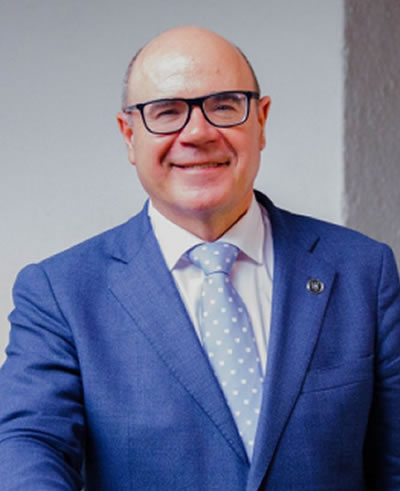
Pedro Mercado Pacheco is Rector Magnífico of the University of Granada. He is a Professor of Philosophy of Law at the Faculty of Law, where he lectures on the inter-university Master’s Degree in Culture of Peace, Conflicts, Education and Human Rights, among other programmes. He was a visiting professor at the Universities of Edinburgh (UK), Catania (Italy), Guanajuato (Mexico), and at the Centre for Legal Studies of Puebla (Mexico). He also lectured on, and coordinated, the UGR Master’s Degree in Legal Responses to the Phenomenon of Globalisation at the University of Camagüey (Cuba). Moreover, he has served as the Coordinator of the Master’s Degree in Human Rights at the UGR, which is offered in collaboration with the Human Rights Ombudsman’s Office of the State of Guanajuato (Mexico).
In the field of research, Mercado is the recipient of an Outstanding Doctorate Award. He is the author of several books, book chapters, and research articles on the economic analysis of law, as well as on globalisation, the State and law. His latest lines of research focus on the fields of governance, democracy and law, new forms of slavery, and human rights. He is a member of UGR’s Institute of Peace and Conflict Studies (IPAZ) and of the Iberoamerican Research Network on Modern-day Slavery and Human Rights.
Mercado has held multiple university management positions in a variety of roles. He has been a member of the University Senate during several terms (2004-2008 and from 2012 to the present). More recently he served as Vice-Rector for Institutional Policy and Planning (2019-2022).
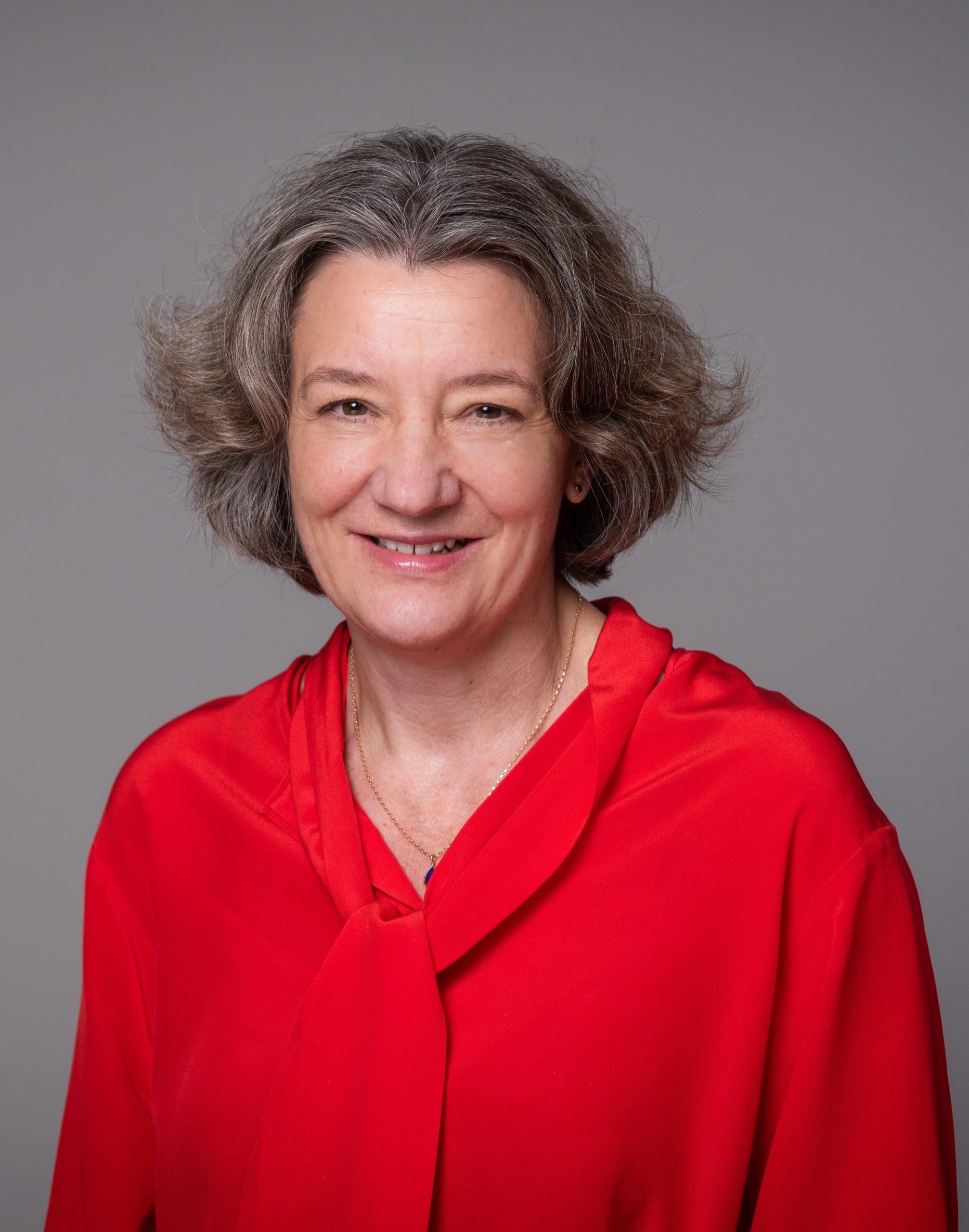
Karen O’Brien has served as Vice-Chancellor and Warden of Durham University since 2022, being the first woman to hold this office.
Karen joined Durham University in January 2022 from the University of Oxford. She has led Durham University through a significant period of strategy renewal, with a focus on key areas of research growth (particularly in the sciences), access and inclusion, financial sustainability, equality and inclusion, and sustainable development goals in both the region and the wider world. Karen is also a Fellow of the Royal Society of Arts, a Fellow of the English Association, and an Honorary Fellow of Peterhouse, Cambridge, and of St Cross College, Oxford. She has published widely on the literature and intellectual history of the Enlightenment.
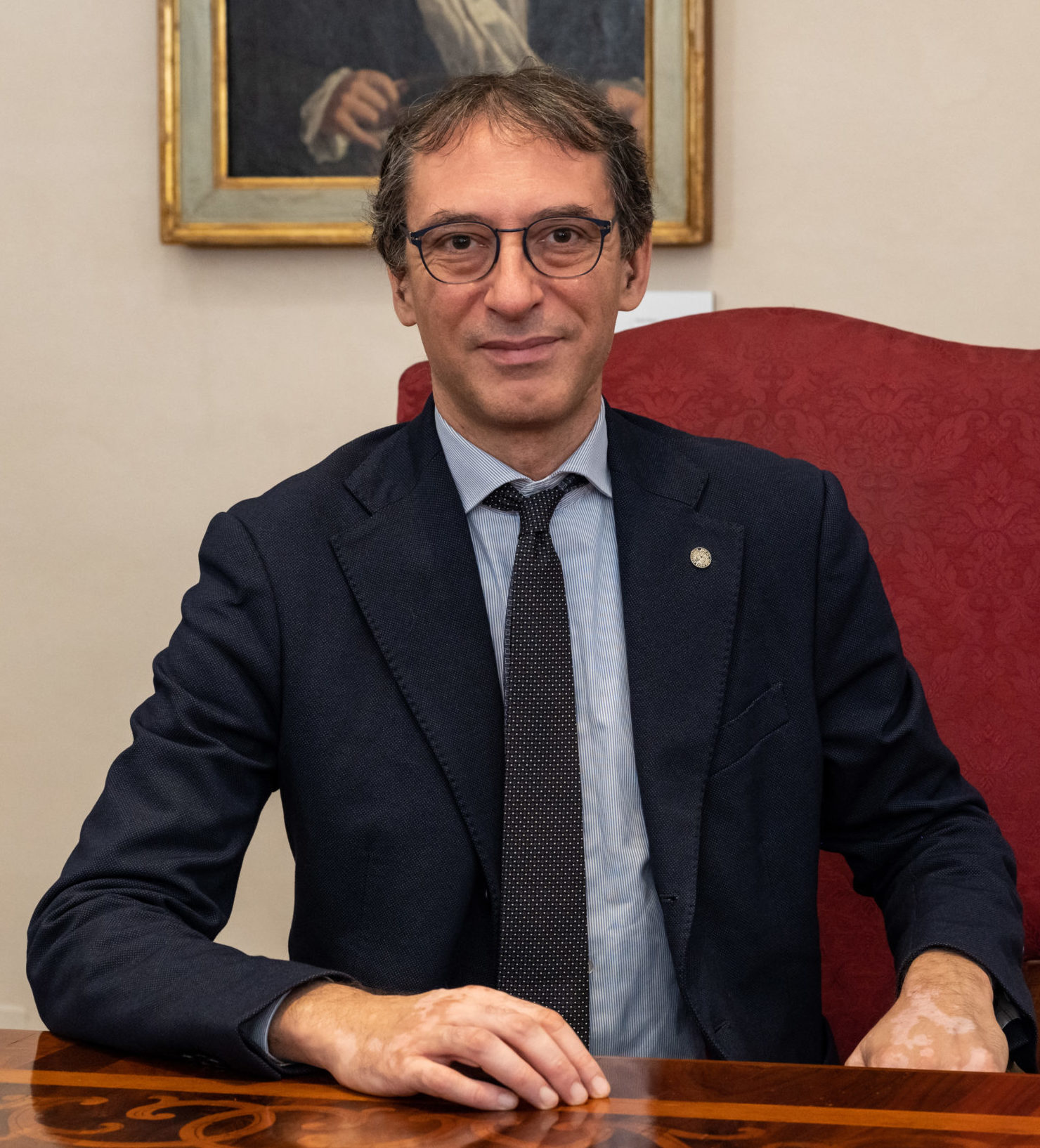
Giovanni Molari has served as Rector of the University of Bologna since 2021. He has been employed at the University of Bologna as full professor in Agricultural Machinery and Mechanisation since 2016, after working as an associate professor (2010-2016) and as a researcher (2000-2010). He holds a PhD in Materials Engineering from the University of Modena and Reggio Emilia. He is qualified to practice as an engineer and has a degree in Mechanical Engineering from the University of Bologna.
Molari’s research activity mainly focused on issues in designing agricultural machines and testing the reliability of agricultural tractors. In addition, he dealt with tillage machines, crop harvesters and machines for animal husbandry, as well as the use of biomass to produce energy.
He coordinated national projects, acted as a scientific supervisor in numerous research agreements with companies, and authored more than 150 manuscripts, 53 of which published in journals indexed on Scopus. He was managing editor (2006-2014) and editor-in-chief (2014-2018) of the Journal of Agricultural Engineering.
At the University of Bologna, he served as Deputy Head (2015-2018) and Director (2018-2021) of the Department of Agricultural and Food Sciences He was also a member of the University’s Academic Senate and human resources committee from 2018 to 2021.
He is the President of the Magna Charta Observatory.

Margareth Hagen is the Rector of the University of Bergen since January 2021. As the elected pro-rector of the institution between 2017 and 2021, she was overseeing research ethics, PhD Programs, and the university’s research engagement. She chaired the university’s research committee which advises the University Board on research policy and long-term strategic research issues. In the period 2013-2017 Hagen held the position as the elected Dean of the Faculty of the Humanities. She has served as Head of Research at the Department of Foreign Languages. Hagen has also chaired the University’s Committee for Equal Opportunities.
A board member of the European Alliance for Social Sciences and Humanities, Hagen also chairs the Nordic/Baltic advisory Board of Academia Europaea’s Bergen knowledge Hub. She is board member of SNL (Encyclopedia of Norway) and member of the scientific committee of the journal Critica Letteraria. Margareth Hagen is Professor of Italian Literature. Her research has focused on the relationship between poetics, literature, and history in 16th century Italy. In recent years, she has worked particularly on issues at the intersection between the humanities and the natural sciences.
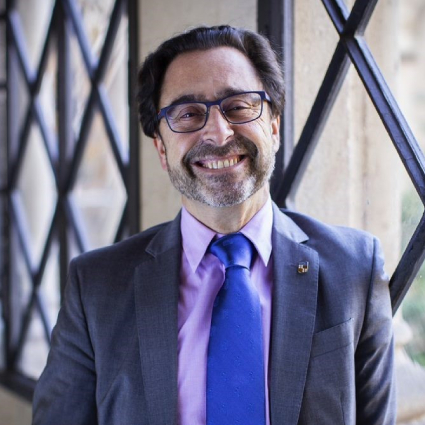
Joan Guàrdia Olmos is the Rector of the University of Barcelona. Full Professor at the Faculty of Psychology, he has been teaching since 1984 on the topics of the research methodology in psychology. Doctor of Psychology from the same university, he did postgraduate studies in Statistical Data Analysis at the University of Essex (England).
He has participated in more than thirty doctorate courses (national and international). He is a visiting professor at various universities and has given more than one hundred seminars in areas of his research activity at European and American universities. His research activity has led him to the direction of more than 20 doctoral theses, both in his own university and others, and to the presentation of more than 250 communications in congresses and scientific meetings, as well as the publication of more than 40 books and chapters and finally to the generation of more than 250 scientific articles, of which more than 200 in indexed journals and more than 180 in own journals of the Journal Citation Reports. He is currently the coordinator responsible for the Consolidated Research Group (SGR 266) on Quantitative Psychology and also for the Consolidated Teaching Innovation Group on Learning Statistics.
He has held various academic positions in university management both at his university and at other institutions. He is also an evaluator of different calls and programmes of various national and international evaluation agencies and indexed journals.