
Coimbra Group contributes to strategic reflections on the future of European Universities Alliances
16 April 2026
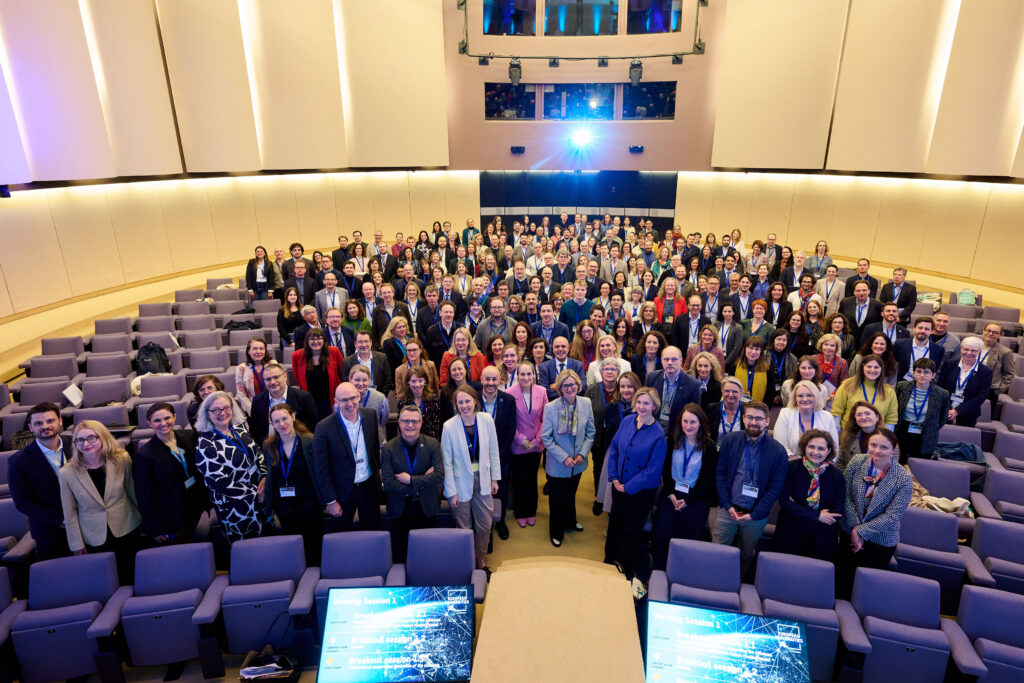
The Coimbra Group was invited by the European Commission’s Directorate-General for Education, Youth, Sport and Culture (DG EAC) to take part in the European Universities Alliances Coordinators’ Working Retreat, held in Brussels on 14 April 2026. The event focused on the future of the European Universities initiative beyond 2027, in the context of upcoming negotiations on the next Multiannual Financial Framework (MFF). The network was represented by Brussels Office Director, Emmanuelle Gardan.
The full-day strategic gathering brought together coordinators from the 65 European Universities Alliances funded under Erasmus+ and the eight consortia holding a Seal of Excellence. Participants also included FOREU4ALL, European university networks, National Erasmus + Agencies, the EACEA, and representatives from several Directorates-Generals of the European Commission.
The invitation reflects the strong engagement of the Coimbra Group and its member universities in the European Universities initiative. Coimbra Group members are currently involved in eight Alliances and one Seal of Excellence. Their experience positions our network as a key contributor to shaping the next phase of the initiative.
European Universities Alliances at a turning point
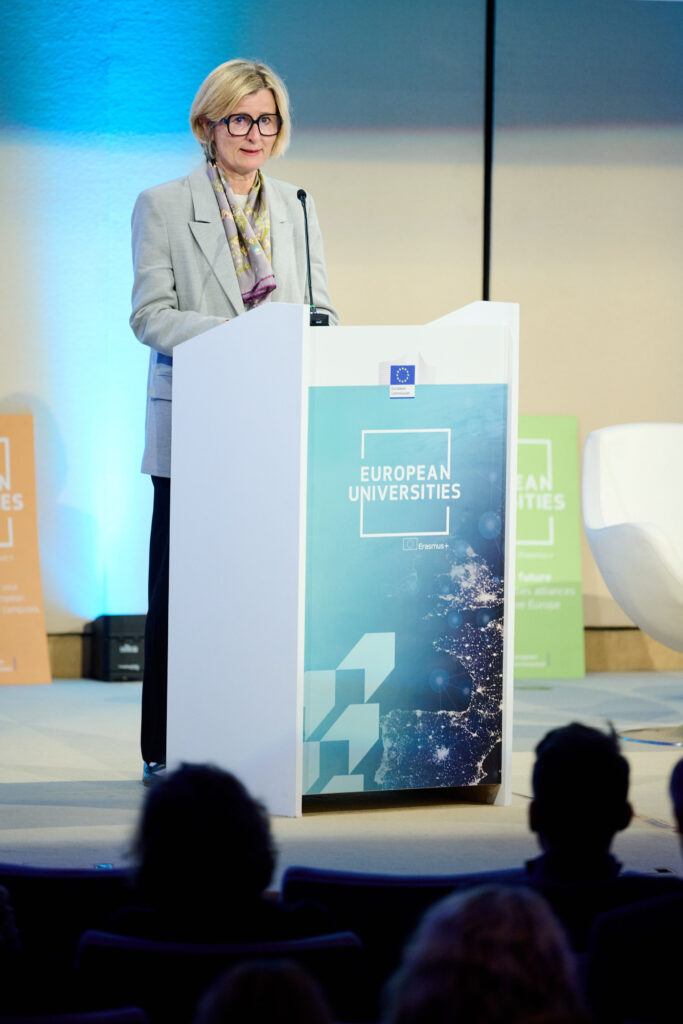
Opening the retreat, Pia Ahrenkilde Hansen, Director-General of DG EAC, emphasised that European Universities Alliances have profoundly changed how universities operate, and cooperate, in Europe, since the initiative was launched in 2019. She highlighted major achievements in pedagogical innovation, institutional cooperation, academic careers and mindset change, noting that Alliances have helped push boundaries and lay the foundations for a more integrated European Higher Education and Research Area.
In a rapidly evolving geopolitical context, she highlighted the increasingly important role of Alliances in strengthening Europe’s attractiveness as a destination of choice for learning, research and innovation. She also stressed their contribution to territorial cohesion and to anchoring universities more firmly within their local innovation ecosystems. She identified the diversity of Alliances’ profiles and thematic focus as one of their key strengths.
Looking ahead, DG Ahrenkilde Hansen reaffirmed that Erasmus+ will remain the main EU funding instrument supporting European Universities Alliances, while new funding approaches and complementary instruments are still being explored as part of a broader “investment pathway” to sustain long‑term ambitions.
Shaping future funding models under Erasmus+
A central focus of the retreat was the future funding framework for European Universities Alliances within Erasmus+ for the period 2028-2034. Discussions confirmed that the current model is likely to evolve significantly to better reflect the depth and specific features of institutional cooperation developed by Alliances.
Among the options explored during the brainstorming session were:
- Longer funding cycles, potentially up to seven years, combined with periodic evaluations.
- Changes to the current funding model, potentially moving away from budgeting mechanisms primarily linked to the number of partner institutions, towards models that could potentially combine core funding with performance-based top ups (variable geometry), or potentially even fully performance based funding.
Participants highlighted the challenge of avoiding overly quantitative indicators, while better capturing institutional transformation and simplifying evaluation processes. Overall, discussions converged on the need to balance predictability and flexibility, ensuring that alliances can plan long-term transformation while remaining accountable for results and impact.
Key policy themes addressed
The programme combined plenary debates with seven working sessions dedicated to topics shaping the next programming period:
The funding model for Alliances under Erasmus+ 2028-2034
- Funding models for Alliances under Erasmus+ 2028-2034
- Mobility, with a focus on quality and depth of learning experiences rather than numbers alone
- The international dimension of Alliances
- Alliances’ role in strategic sectors for EU competitiveness
- Alliances’ role for completing the European Research Area
- Performance monitoring and how it can best capture institutional transformation
- Optimisation and streamlining of reporting and reviewing processes
From pioneers to role models
The retreat highlighted European Universities Alliances have moved from a pilot phase to becoming mature structures with distinct profiles.
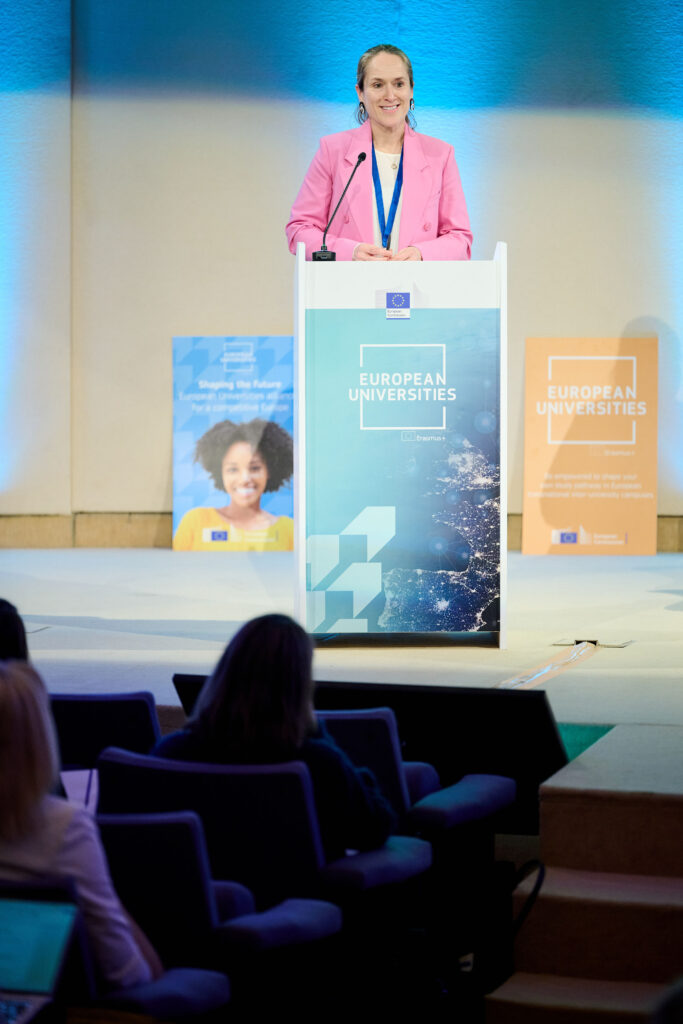
In her keynote address, Coimbra Group’s Executive Board Vice-Chair Beatrix Busse, speaking on behalf of FOREU4ALL, underlined the broader political value of European Universities Alliances as trusted partners for Europe’s future. She stressed that Alliances demonstrate that “universities are not afraid to tackle complex societal, scientific and geopolitical challenges, acting with resonance, and grounded in European values”.
She highlighted Alliances as ecosystems that are more than the sum of their parts: sharing infrastructures, developing common strategic research and innovation agendas, advancing science diplomacy, testing flexible academic careers, strengthening humanities and social sciences, and promoting transdisciplinary approaches to AI, upskilling and reskilling. Noting the high return on investment already achieved with limited resources, she called for a simplified, long-term and holistic funding approach. “Use us, trust us,” she concluded, inviting the Commission to shape the investment pathway together with European Universities Alliances.
The concluding panel underlined that Alliances now increasingly serve as role models for the wider higher education sector. Rather than creating a rigid divide between universities inside and outside Alliances, participants stressed the importance of viewing European Universities as part of the broader spectrum of European and international cooperation – offering inspiration and transferable lessons rather than fixed templates.
All presentations delivered during the retreat are available on the Coimbra Group members’ intranet.
Next Steps
Policy discussions on the future of European Universities Alliances will continue in the coming months, in parallel with negotiations on the next MFF. DG EAC has announced a meeting in Brussels of the rectors of higher education institutions participating in the European Universities Initiative in June 2026, as well as additional exchanges expected in the autumn.
The Coimbra Group will remain actively engaged in these debates, advocating for a strong and ambitious Erasmus+ programme and innovative funding models that allow European Universities Alliances to realise their full potential across all university missions.
The Irish Presidency of the Council of the EU will organise the 4th European Universities Initiative Forum at Maynooth University on 9-10 July 2026, where Emmanuelle Gardan, representing the Coimbra Group, will speak on the panel “Breaking Down the Silos: Education, Research, and Innovation.”