

Universities at the Heart of Europe’s Future: Reflections from the Danish EU Presidency
22 December 2025
Professor Brian Bech Nielsen, Rector, Aarhus University
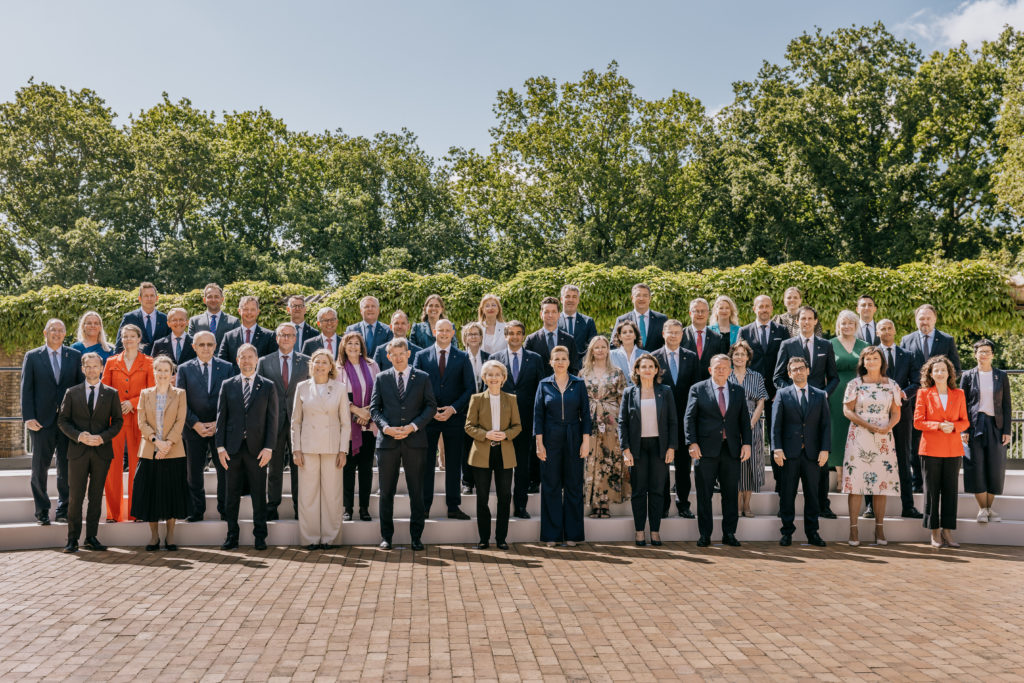
It was a proud day for Aarhus University when, at the beginning of July, we hosted the official opening of the Danish Presidency of the Council of the EU. Led by Ursula von der Leyen, the European Commission convened at Aarhus University for its first meeting under the Danish EU Presidency, which was held in the university’s iconic Main Hall.
This marked the beginning of an intense six months of debate and negotiations, shaped by a shifting geopolitical landscape and focused on Europe’s role in a changing global order. Fostering unity in Europe is now more crucial than ever. But unity alone is not enough. The current security climate calls for action, and it was against this backdrop that many of the ministerial negotiations conducted during the Danish EU Presidency took place, including those on the EU’s future initiatives in education, research and innovation.
A central task for the Danish EU Presidency was to lead negotiations on the 2028–2034 EU budget, known as the Multiannual Financial Framework, and to outline key elements of the forthcoming European Competitiveness Fund and framework programmes for research, innovation and education. These negotiations were shaped by the recommendations in the Draghi report, which call on Europe to generate more innovation, productivity and growth to boost its global competitiveness.
Danish universities helped inform the debate and negotiations on Europe’s future direction, and our input has been taken on board by the relevant ministries. We fully endorse the analysis of Europe’s structural challenges, and we stress the need for Europe to increase investment in research, innovation, energy and digitalisation to remain globally competitive while reducing its dependence on the rest of the world. Throughout the negotiation process, one of our key messages has been to maintain a long-term focus. In short, we must invest in excellent basic research, as this is the key to Europe delivering groundbreaking innovation over the long term.
Holding conferences across the country as part of the Danish EU Presidency has provided a welcome opportunity to present the universities’ views and to showcase Danish expertise. Bringing together researchers, politicians and stakeholders from organisations, NGOs, ministries and the European Commission also creates unique opportunities to drive European development forward towards new goals.
In the second half of 2025, Denmark will have hosted no fewer than 19 official Presidency conferences within research, innovation and education, covering a wide range of fields, from digitalisation, AI, life science and quantum technology to energy, human values and the bioeconomy – to name but a few.
Aarhus University also had the pleasure of hosting the Mission Soil Week conference to promote the Horizon Europe mission A Soil Deal for Europe. This major EU Presidency conference brought together more than 300 researchers, policymakers and stakeholders, all committed to improving the health of our soils to protect the environment today and for generations to come. It provided an opportunity to reflect on our progress, share new ideas and learn from one another – for example, by exploring the Danish tripartite model as a way for farmers, environmental organisations and policymakers to collaborate and make informed decisions based on the latest knowledge and research on climate and biodiversity.
In this way, the conference served as a clear example of how an EU Presidency can create valuable opportunities to apply the latest research-based knowledge in a global context and help build a better world.